


Introduction
In today’s world, millions of people take prescription or over-the-counter medications daily to manage acute or chronic health conditions. Questions about how to administer these drugs safely are increasingly common, as patients look for convenience, cost savings, or tailored dosing. Among the most frequent inquiries: Is it safe to split or crush your medication? Although modifying tablets or capsules may seem harmless, this practice can result in medical consequences, some of which are possibly severe. Healthcare professionals stress that not all medications are designed to be altered in form,and doing so without expert guidance may compromise efficacy,safety,or both.
This comprehensive article, written by a certified medical professional, investigates the clinical science, guidelines, risks, and considerations involved in splitting or crushing medications. Practical advice, scientific evidence, and expert recommendations are provided to help patients and caregivers make informed decisions-always in collaboration with their healthcare provider.
Understanding Medication Formulations
To appreciate why tablets or capsules may- or may not- be safely split or crushed, it’s necessary to understand how pharmaceuticals are formulated. Oral medications are engineered with specific chemical compositions and physical forms, each with therapeutic benefits and limitations.
types of Solid Oral Medications
- Immediate-release (IR): Designed to dissolve quickly and deliver the drug into the bloodstream promptly.
- Extended-release (ER, XR, SR, CR): Release the active substance gradually over time for sustained effect and reduced dosing frequency (FDA).
- Enteric-coated (EC): Special coating protects the active ingredient from stomach acid or prevents irritation of the gastric mucosa.
- Film-coated: May mask taste, ease swallowing, or protect drug stability.
- Capsules (hard or soft): Contain the active drug in a gelatinous shell, sometimes as granules, powders, or liquids.
Each formulation addresses specific pharmacokinetic and pharmacodynamic characteristics, meaning that altering the dosage form changes how the medication works in the body.
Why Do Patients Split or Crush Medication?
Several legitimate reasons often prompt patients or caregivers to consider splitting or crushing medications.These include:
- Dose adjustment: Achieving a lower or nonstandard dose not commercially available.
- Easier swallowing: Addressing dysphagia (difficulty swallowing), common among older adults or patients with neurological disorders (NCBI).
- Cost containment: Splitting higher-dose tablets to save on prescription costs.
- Pediatric or geriatric administration: Smaller size, mixing with food or liquids when patients can’t ingest solid tablets.
Though, the suitability of splitting or crushing depends on the specific medication and its clinical context. Missteps can result in underdosing, overdosing, loss of effect, or unexpected side effects.
Which Medications Are Safe to Split or Crush?
Not all medications are suitable for splitting or crushing. The safety and appropriateness depend on the drug’s properties, its dosage form, and patient factors. The following sections discuss general principles, as well as specific drug classes and scenarios.
General Rules for Splitting Tablets
- Only immediate-release uncoated tablets with a clear score line are generally safe to split, unless contraindicated for that particular drug (FDA: Dividing Tablets).
- Splitting should not be done unless explicitly permitted by a physician or pharmacist. Some scored tablets are not designed to be split but are marked for identification only.
Medications That may Be Split*
| Drug Type | Examples | Notes/considerations |
|---|---|---|
| Some statins | Atorvastatin, Simvastatin | Only some formulations; check with pharmacist |
| Antihypertensives | Lisinopril, Metoprolol tartrate | immediate-release versions only |
| Some antidepressants | Sertraline, Citalopram | Depends on formulation |
| Pain relievers | Acetaminophen, Ibuprofen | plain (not extended-release or coated) |
*Always verify with a healthcare provider or pharmacist before splitting.
Medications Typically NOT Safe to Split or Crush
- Extended-release, controlled-release, or delayed-release formulations: Splitting or crushing can led to rapid drug release, dose dumping, and toxicity (Harvard Health).
- Enteric-coated tablets: Crushing destroys the protective barrier, leading to stomach irritation or drug inactivation (NCBI).
- Hormonal agents, chemotherapy, teratogenic drugs: Splitting or crushing exposes handlers to hazardous substances (e.g., finasteride, methotrexate, tamoxifen).
- Drugs with narrow therapeutic indices: Examples include warfarin,digoxin,levothyroxine; inaccurate dosing can severely affect patient safety ([NHS](https://www.nhs.uk/medicines/)).
- Sublingual or buccal medications: Designed for absorption through mucosa; altered administration disrupts efficacy (e.g.,nitroglycerin,fentanyl).
Pharmacological and Clinical Risks of Splitting or Crushing Medication
Altering the form of medication is not merely a mechanical act; it changes how the drug behaves in the body. Some of the key risks include:
- Loss of medication efficacy: Some active ingredients degrade when exposed to air, moisture, or acidic environments; splitting removes protective coatings.
- increased side effects or toxicity: Extended-release or controlled-release drugs, if altered, can release too much active substance at once (“dose dumping”), causing hazardous side effects or toxicity (FDA: Tablet Splitting Q&A).
- Ineffective symptom control: Pediatric or geriatric patients might potentially be underdosed or overdosed due to splitting errors.
- Unintentional exposure: Crushing hazardous drugs (e.g., antineoplastics, hormones) can expose caregivers or family members to harmful substances (CDC: Hazardous Drug Exposures).
- Dosing errors: Splitting unevenly can cause important dose variability due to tablet composition or physical inconsistencies.
- Potential for altered taste or palatability: Some crushed tablets have a bitter or unpleasant taste, interfering with adherence.
Tablet Splitting Devices and Techniques: Safety and Accuracy
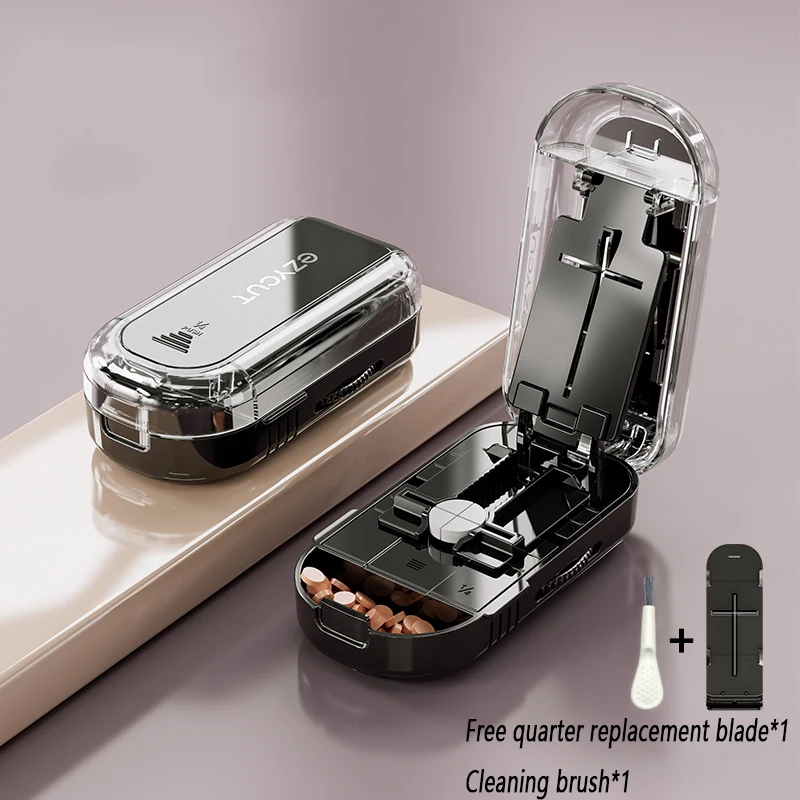
When medication splitting is approved by a healthcare provider, the method of splitting is vital. Using kitchen knives or hands can result in uneven halves and potential injury. Tablet splitting devices are designed to safely and evenly divide pills, but effectiveness varies based on tablet size, shape, and hardness.
- Choose a high-quality, clean splitting device.
- Measure accuracy: Studies find that even with splitters, up to 25% of halves may deviate substantially from the intended dose (NCBI: Accuracy of Tablet Splitting).
- Split only one tablet at a time,and do not split doses in advance unless you know the drug is stable after dividing.
Some pharmacies offer tablet splitting as a service, especially for patients with arthritis, tremor, or visual impairment.
Crushing Medications: Clinical Indications and Contraindications
Crushing is frequently enough considered for specific populations, such as pediatric, geriatric, or patients requiring feeding tubes (Mayo Clinic Proceedings). However, the process poses unique risks beyond those of splitting.
Indications for Crushing
- Patients with dysphagia: common in older adults after stroke, those with Parkinson’s disease, or certain surgical interventions.
- Feeding tube administration: When oral intake is not possible, but only certain medications are compatible (NHS: Feeding Tubes).
Risks and Hazards of Crushing
- Similar to tablet splitting, extended- or controlled-release, enteric-coated, and hazardous drugs must not be crushed (FDA: Do Not Crush List).
- Crushed medications may interact with food or tube feedings, leading to altered absorption or pharmacokinetic disruptions.
- Some drugs become less effective, toxic, or irritant if crushed. For example, modified-release opioids can result in overdose when crushed and ingested (JAMA: Opioid Abuse Risk).
Special Considerations: High-Risk Medications
Particular attention is needed for drugs with complex pharmacology, high toxicity, or narrow therapeutic indices:
| Drug Category | Examples | Reason for Caution |
|---|---|---|
| Anticoagulants | Warfarin, Apixaban | Dose changes alter bleeding risk; small errors = major impacts |
| Cardiac Glycosides | Digoxin | Narrow margin of safety; toxicity risk |
| Antiepileptics | Phenytoin, Carbamazepine | Erratic absorption when crushed; seizure risk |
| Immunosuppressants | Cyclosporine, Tacrolimus | Critical to transplant success; dose variation can result in rejection |
| Chemotherapeutics | Methotrexate, Tamoxifen | exposure risk to non-patients; efficacy and toxicity concerns |
For a full list of drugs that should never be split or crushed, consult institutional guidelines or resources such as the Institute for Safe Medication Practices (ISMP) or pharmacy-specific “Do Not Crush” lists (FDA).
Alternatives to Splitting or Crushing Medications
If you or a loved one have trouble swallowing or require dose adjustment, consider these alternatives rather than modifying tablets or capsules:
- Ask your pharmacist or physician about choice formulations: Many medications are available as liquids, suspensions, orally disintegrating tablets, or chewable tablets.
- Request an alternative strength if available, to avoid splitting.
- Pharmacy compounding: Some pharmacies can prepare custom doses or liquid forms for medications not otherwise available as oral solutions (FDA: Compounding Q&A).
- Ask about swallowing techniques or aids: Special cups,thickened liquids,or occupational therapy interventions may help.

Guidelines from International Health Authorities
Major regulatory agencies and professional societies have published clear guidance about altering medication dosage forms:
- FDA recommends patients never split or crush any medication without guidance. Tablet splitting should be considered only if the manufacturer’s labeling allows and after professional consultation.
- NICE (UK): Warns against splitting or crushing modified-release, enteric-coated, or hazardous medications; stresses the importance of multidisciplinary review.
- Institute for Safe Medication Practices: Maintains updated “Do Not Crush” lists freely available online.
Patient Counseling and Best Practices
When counseling patients or caregivers on medication modification, expert sources recommend:
- Consult a healthcare professional: Physician or pharmacist input is essential prior to splitting/crushing any pill.
- Read the package insert and labeling: Prescribing information will state if splitting/crushing is safe or contraindicated.
- Use precision devices: If splitting is approved,use a tablet splitter,not a household knife.
- Split only as needed and avoid advance splitting: Pre-splitting can affect drug stability or potency.
- Be aware of hazardous or high-risk drugs: Pregnant women, children, and caregivers may be at risk of exposure; gloves or protective barriers may be needed.
- Monitor for changes in efficacy or side effects: Any new or unexpected symptoms should be reported immediately.
clinical Case Studies and Real-World Complications
Published studies illustrate the true clinical impact of mishandling medications.For example, crushing sustained-release nifedipine has caused life-threatening hypotension due to rapid absorption (NCBI: Nifedipine Toxicity). Similarly, accidental dose-dumping of opioids after splitting or crushing can lead to fatal respiratory depression in opioid-naïve patients (JAMA).
A study in The Lancet notes that approximately 25% of hospitalized patients receive some medication via a modified form, 20-30% of which may be inappropriate, placing them at risk of adverse effects or treatment failure. This highlights the need for improved education and prescribing practices.
Frequently Asked questions (FAQ)
- Can I split my medication if the tablet has a score or groove?
- Not always. Some tablets are scored only for identification, not splitting. Always check with a pharmacist or refer to authoritative guidelines (FDA).
- how do I know if my medication can be crushed?
- The package insert or summary of product characteristics will specify crushing suitability; otherwise, consult your pharmacist or this Do not Crush list.
- Is it safe to split or crush medication for a feeding tube?
- Only for drugs proven to be safe and effective by this route; consult a clinical pharmacist or refer to feeding tube medication guidance (NHS).
- Are there alternatives if I cannot swallow tablets or capsules?
- Yes, many drugs are available as liquids, dissolvable forms, or can be compounded by pharmacies. Always ask your healthcare team.
Conclusion
The science, safety, and efficacy of splitting or crushing medications depend on the specific drug, its formulation, and the patient’s health context. While in some situations tablet splitting might potentially be practical-and even cost-effective-serious consequences can ensue if done with the wrong medication or without professional oversight.Modern formulations often rely on specialized coatings and release mechanisms, and manipulation can unpredictably alter pharmacokinetics, side effect risk, and therapeutic outcome.
Patients should never split or crush medication without explicit approval and instructions from their healthcare provider.Where swallowing or dose flexibility is a concern, alternative formulations or individualized compounding might potentially be options. For every patient, consultation with a physician or pharmacist is essential to ensure safety, efficacy, and optimal therapeutic success.
References
- WHO – Medications and Their administration
- FDA: Tablet Splitting
- NCBI: Enteric-Coated Tablets
- Harvard Health: Dangers of Crushing/Chewing
- NHS: Medicines A-Z
- FDA: Do Not Crush List
- JAMA: Opioid Abuse Due to Crushing/Splitting
- Institute for Safe Medication Practices: Do Not Crush
- NCBI: Accuracy of tablet Splitting
- Mayo clinic: Drugs & Supplements Database
- Healthline: What Happens When You crush a Pill?
- NICE Guidelines