
Introduction
Upper body strength is a critical determinant of overall health, mobility, and functional independence. From orchestrating daily movements such as lifting groceries and carrying children to supporting ure and promoting metabolic health, strong upper body musculature is indispensable for people across the lifespan. Additionally, insufficient upper body strength has been correlated with increased risk of falls, injuries, and even morbidity—especially among older adults [NIH]. While many turn to commercial gyms and strength machines for muscle-building protocols, a significant body of clinical research demonstrates that equally effective increases in upper body strength can be achieved without the need for complex equipment or gym access [JAMA Network]. This article delivers a comprehensive, evidence-based blueprint for building upper body strength utilizing only bodyweight, household items, or minimal equipment—grounded in clinical research and best practices from sports medicine and rehabilitation science.
Understanding Upper Body Strength: Anatomy and Physiology
The upper body comprises a complex array of muscle groups—each with distinct structural and functional roles. The primary muscle groups involved in upper body strength include the pectorals (chest), deltoids (shoulders), latissimus dorsi (back), rhomboids, trapezius, biceps, triceps, and forearms [Mayo Clinic]. Synergistically, these muscles facilitate pushing, pulling, lifting, and stabilizing movements.
- Pectoralis major/minor: Key for pushing and pressing.
- Deltoids: Drive overhead and lateral movements.
- Latissimus dorsi and Rhomboids: Essential for pulling actions.
- Biceps and Triceps: Control arm flexion and extension.
- Forearm muscles: Govern grip and fine motor control.
Adaptations in muscle hypertrophy and neural activation arise in response to repetitive overload—whether via resistance machines, free weights, or bodyweight resistance [NIH].
The Health Benefits of Upper Body Strength
Robust evidence link upper body strength to improved cardiovascular health, better metabolic regulation, improved bone density, and greater longevity [NIH].Epidemiological studies indicate that stronger grip (a proxy for upper body strength) predicts lower all-cause mortality and reduced incidence of chronic conditions such as type 2 diabetes and cardiovascular disease [CDC].
- Reduces risk of osteoarthritis and other musculoskeletal disorders
- Improves insulin sensitivity and metabolic function
- Mitigates risk of falls and injuries in older adults
- Facilitates activities of daily living (adls) and mobility
Given these multifaceted benefits, implementing a structured resistance program—without the need for gym machinery—constitutes a paramount public health intervention [WHO].
Principles of Muscle-building Without Machines
Muscle hypertrophy and strength gains are governed by the principles of overload, progressive resistance, and adequate recovery [Harvard Health].
- Overload: Muscles must be exposed to a stimulus greater than they are accustomed to.
- Progression: The workload should gradually increase to maintain adaptation.
- Variation: Incorporating diverse movements promotes balanced development and injury prevention.
- Rest/Recovery: Adequate rest between sessions enables muscle repair and growth [Healthline].
Bodyweight training and resistance band protocols can deliver comparable strength improvements to machine-based regimens, even in clinical populations or older adults [NIH].
Key Methods for Building Upper Body Strength Without Machines
1. Bodyweight Exercises
Bodyweight training offers numerous advantages: accessibility, functional carryover, joint-amiable loading, and scalability. Here are core exercises, each supported by clinical research:
- push-ups: Target chest, shoulders, and triceps; numerous variations adjust for progression/regression. Push-up routines have shown significant improvements in upper body power and endurance in both genders [JAMA Network].
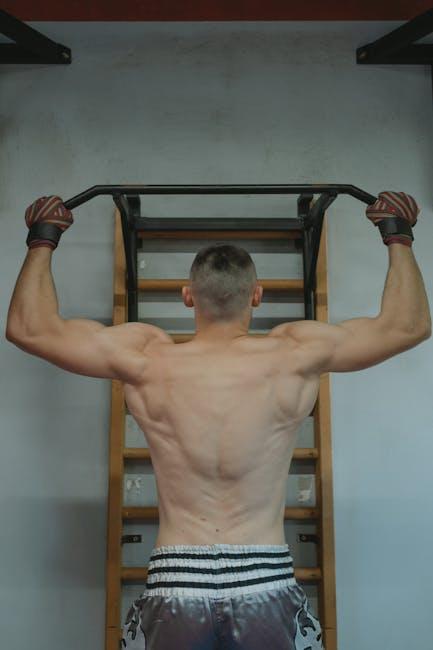
- Pull-ups/chin-ups: Engage the lats,biceps,and core. Even though challenging, they develop pulling strength and grip capacity [NIH].
- Dips: Focus on triceps, chest, and anterior deltoids—can be performed between sturdy surfaces [Healthline].
- Planks and Variations: Core engagement is essential for upper body stabilization in multi-joint movement [Medical News Today].
- handstand Presses/Wall Push-Ups: Ideal for advanced practitioners to target shoulder and scapular strength [MedlinePlus].
2. Resistance Bands and Suspension Trainers
Resistance bands provide variable tension and are clinically proven to enhance strength, echoing the results of traditional free-weight approaches [NIH]. Key movements include:
- Band Rows: Effective for the upper back, rhomboids, and middle trapezius [Mayo Clinic].
- Band Chest Press and Overhead Press: Mimic pushing strength without external weights.
Suspension trainers (e.g., TRX systems) utilize gravity and bodyweight for scalable functional training, showing benefits in muscular endurance and stability [NIH].
3. Utilizing Household and Environmental Objects
Everyday items—such as backpacks filled with books, water jugs, or stairs—can be repurposed for resistance. For example:
- Loaded Backpacks for Rows: Provides horizontal pulling stimulus.
- Chair Dips: Replicate parallel bar dips.
- Step-Ups and Inclined Push-Ups on Stairs: Offer graded difficulty.
These approaches enable structured resistance protocols for individuals with limited access to equipment or gym facilities [Harvard Health].
How to Structure Your At-Home Upper body Strength Program
A well-designed program should incorporate balanced pushing and pulling movements, sufficient volume (sets/repetitions), and progressive overload. The following is a science-backed template for general adult populations:
- warm-Up (5–10 minutes): Dynamic stretching and light aerobic activity improve neuromuscular activation, increase circulation, and reduce injury risk [CDC].
- Main Set (20–30 minutes): Prioritize compound exercises (push-ups,rows),mixed with isolated movements for biceps/triceps. Aim for 2–4 sets of 8–15 repetitions per exercise [NHS].
- Cool-Down (5–10 minutes): Incorporate static stretching and gentle movements to aid recovery.
Training frequency recommendations align with public health guidelines—2 to 3 sessions per week, with at least 48 hours between sessions targeting the same muscle group [Mayo Clinic].

Step-by-Step Progression for Home-Based Upper Body Strength Workouts
Beginner Phase
Novices should emphasize mastering technique and building foundational strength.Key guidelines:
Focus on proper form to mitigate injury risk (e.g., neutral spine, scapular retraction, elbow control).
Start with incline push-ups (hands elevated), negative/eccentric pull-ups, and triceps dips with foot support.
Gradually increase repetitions or decrease assistance as strength improves [Medical News Today].
Intermediate Phase
As proficiency improves:
Progress to standard push-ups, chair dips, unassisted rows (with a towel, resistance band, or makeshift apparatus).
begin integrating challenging planks and lateral movements.
Use household weights (filled water bottles, loaded packs) for increased resistance.
Start manipulating tempo—slowing eccentrics, brief holds at the bottom, or “pause” reps [NIH].
Advanced Phase
Athletes or seasoned lifters benefit from:
Advanced calisthenics (pike push-ups, archer push-ups, decline push-ups, plyometric variations).
weighted vest or loaded backpack push-ups and pull-ups.
Isometric holds and single-arm movements (one-arm planks, single-arm push-ups).
High-intensity interval integration for maximal power and endurance development [ACSM].
Emphasizing Safety: preventing Injury When Training Without Machines
Risk mitigation is paramount in any resistance training setting. Without the fixed path and stability provided by machines, exposure to improper mechanics increases the risk of musculoskeletal injury. Evidence-based strategies include:
Prioritize warm-ups to prepare tissues for loading [Mayo Clinic].
Focus on controlled movement rather than speed or excessive volume.
adapt or regress exercises in the presence of pain, instability, or discomfort.
Incorporate rest periods and deload weeks to minimize overuse injury (tendinopathy, bursitis).
Special populations—pregnant individuals, those with cardiovascular, orthopedic, or neurologic comorbidity—should seek individualized evaluation by a healthcare provider or physical therapist before initiating any new regimen [NHS].
Special Considerations for Populations With Specific Needs
Older Adults
Aging is associated with sarcopenia (loss of lean muscle). Home-based bodyweight and elastic-band training protocols can markedly improve strength, balance, and prevent fragility fractures in older people—even outperforming inactive or control groups in randomized controlled trials [NIH].
Pediatric and Adolescent Populations
For children and adolescents, bodyweight exercises (e.g., push-ups, planks, modified pull-ups) prioritize motor skill acquisition, joint safety, and enjoyment over maximal loading [CDC]. Excessive resistance and improper technique should be avoided to protect developing musculoskeletal structures.
Individuals With Disabilities or Chronic disease
Those with restricted mobility or chronic health conditions benefit from adapted at-home upper body regimens, emphasizing range of motion, gentle resistance, and safety. Consulting with a registered physiotherapist ensures exercises are tailored to functional ability and medical status [NHS].
Evidence-Based Sample Routines
Several reputable institutions provide downloadable and adaptable programs for individuals seeking structured, machine-free upper body strength regimens:
- NHS Strength and Flexibility Exercises
- CDC Examples of Muscle-Strengthening Exercises
- Harvard Health No-Gym Workout
Implementing these professionally designed routines can facilitate safe and effective strength building in almost any habitat.
The Role of Nutrition and Recovery
Muscular adaptation is profoundly influenced by nutritional status. Protein intake should meet or exceed 1.2–2.0 grams per kilogram bodyweight per day for active individuals to optimize muscle protein synthesis [NIH]. Adequate hydration, micronutrients (calcium, vitamin D, magnesium), and caloric sufficiency are also integral [Harvard Health].
Equally vital are sleep hygiene and structured rest days, which ensure optimal hormonal milieu for muscle recovery and minimize negative outcomes such as overtraining syndrome [NIH].
Monitoring Progress Without Machines
Tracking progress in bodyweight or home-based programs is essential for ongoing motivation and appropriate progression.Research supports the use of objective measures such as:
- Time-to-fatigue or maximum repetitions per set (push-up, pull-up records)
- Photographic or circumference measurements for muscle hypertrophy
- Grip strength (using a dynamometer if available)
- functional capacity (number of stairs climbed, ADLs completed with ease)
These methods are validated indicators of relative strength and functional gains in both clinical and athletic populations [NIH].
Common Myths and Misconceptions About Non-Machine Strength Training
-
Myth: Machines are required for “real” strength gains.
fact: Peer-reviewed trials show bodyweight and elastic resistance reliably build muscle and functional strength at any age or baseline fitness [NIH].
-
Myth: Bodyweight exercises do not provide adequate stimulus.
Fact: Manipulation of volume, leverage, and progression yields extensive overload [JAMA Network].
-
Myth: Home workouts are inherently unsafe.
fact: With proper technique and progression, injuries are not more frequent than in machine-based protocols [Harvard Health].
Summary Table: key Exercises Without Machines
| Exercise | Primary Muscles | Equipment | Beginner Variation | Advanced Variation |
|---|---|---|---|---|
| Push-ups | Chest, Shoulders, Triceps | None | Incline push-up | Plyometric Push-up |
| Pull-ups | Lats, Biceps | Bar/Solid Edge | Assisted (with chair or band) | One-arm Pull-up |
| Dips | Triceps, Chest | Chair | Feet Supported | Weighted Dips |
| Rows | Rhomboids, Mid Back | Towel/Band/Backpack | Kneeling Row | Single-arm/Band Row |
| Planks | transverse Abdominis, Shoulders | None | Knees Down | Weighted/One-arm |
Expert Tips for motivation and Adherence
Maintaining consistency outside a gym setting can be challenging. To optimize adherence:
- Establish a regular schedule and keep workouts brief but focused.
- Track progress and celebrate incremental improvements.
- Seek accountability from partners, friends, or online support communities.
- Vary movements and routines every 4–8 weeks to minimize plateaus and mental fatigue [Healthline].
When to Consult a Healthcare Professional
Even though bodyweight and home-based protocols are broadly safe, certain populations benefit from medical clearance before substantially increasing physical activity:
- History of cardiovascular disease, hypertension, or recent surgery
- Musculoskeletal pathology (acute or chronic injury)
- Unexplained fatigue, chest discomfort, or dizziness during activity
Consult your primary care provider or a qualified exercise or rehabilitation specialist if you have questions regarding program suitability.
Conclusion
Building upper body strength without gym machines is accessible, safe, and grounded in modern exercise science. With minimal equipment, proper technique, and structured progression, individuals across ages and abilities can achieve significant gains in strength, function, and quality of life. Prioritizing evidence-based protocols—tailored for your unique needs—ensures not only effectiveness but longevity in one’s health and fitness journey.
For further guidance, explore these in-depth resources on exercise and fitness from Harvard Health and related clinical platforms.
References
- NIH: Muscle strength and mortality risk
- JAMA: Strength training without machines
- Mayo Clinic: Upper body muscle groups
- CDC: The health benefits of strength
- WHO: Physical activity guidelines
- Harvard Health: Reasons to strength train
- Healthline: muscle building FAQ
- NIH: Home-based strength training
- JAMA: Push-up capacity and health outcomes
- Healthline: Triceps Dips for strength
- Medical News Today: Plank exercises
- MedlinePlus: Exercise tips at home
- NIH: Resistance bands training
- NIH: Suspension training science
- Harvard Health: No gym, No Problem
- CDC: Safe exercise for joints
- NHS: Strength and Flexibility Plan
- Mayo Clinic: Importance of stretching
- ACSM: HIIT for strength
- Harvard Health: The no-gym workout