

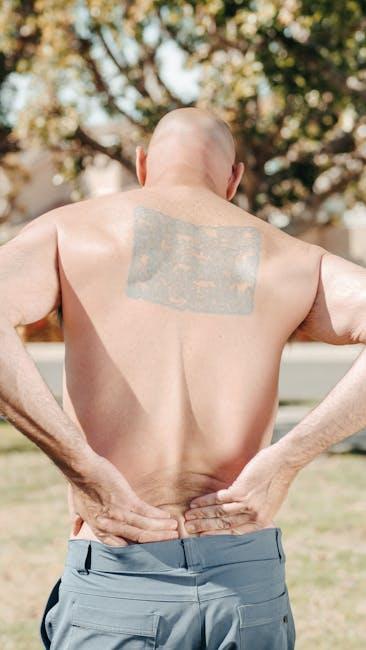
Lower back pain that feels sharp during small movements
Introduction
Lower back pain that feels sharp during small movements is a prevalent clinical complaint in primary care and emergency medicine settings worldwide. According to the World Health Organization (WHO), low back pain (LBP) affects approximately 619 million people globally as of 2020, representing one of the leading causes of disability and work absenteeism. In the United States, the Centers for Disease Control and Prevention (CDC) reports that up to 25% of adults experience an episode of lower back pain over any 3-month period,with sharp,acute presentations often complicating daily functioning and quality of life. Sharp back pain induced by minor activities, such as bending, twisting, or standing from a seated position, often signals underlying pathologies requiring accurate diagnosis and tailored management. Understanding the epidemiology, etiology, and evidence-based interventions for this specific pain pattern is essential for patients, clinicians, and policymakers alike.
Overview and Definition
Lower back pain (LBP) is defined as pain or discomfort localized between the costal margin (bottom of the rib cage) and the lower gluteal folds (top of the buttocks). It frequently radiates to the legs, especially when neuropathic components such as sciatica are present. From a clinical standpoint, LBP is classified based on duration—acute (<6 weeks), subacute (6–12 weeks), and chronic (>12 weeks)—and by underlying etiology: nonspecific (mechanical), radicular (nerve involvement), or secondary to systemic disease (PubMed).
Sharp lower back pain occurring with minimal or subtle movement is distinct from chronic,dull-aching pain. Such pain is characteristically sudden, intense, and often provoked by minor physical triggers. This pain may indicate acute muscle strain, ligamentous injury, facet joint dysfunction, or even nerve root irritation. It can affect individuals of all ages and activity levels, with higher prevalence among adults aged 30–60 years (NIH Research Matters).
Prevalence studies reveal that up to 80% of adults will experience lower back pain at some point in their lives, with a substantial proportion reporting sharp, disruptive symptoms during basic movements (PubMed). Understanding its pathophysiology, diagnostic approach, and impact is foundational for patient care and public health interventions.
Causes and Risk Factors
Lower back pain that feels sharp during small movements arises from a complex interplay of musculoskeletal,neurological,and,less commonly,systemic or visceral etiologies. Identifying the underlying cause guides both acute management and long-term prevention strategies.
Musculoskeletal Causes
- Muscle Strain or Ligament Sprain: Sudden twisting, lifting heavy objects, or awkward ures can overstretch or tear paraspinal muscles and ligaments, resulting in acute, sharp pain with movement. According to the Mayo Clinic, mechanical low back injuries are the most common cause of acute sharp pain in this region.
- Facet Joint Dysfunction: The facet joints, which connect the vertebrae at the back of the spine, can become irritated or inflamed—commonly known as “facet joint syndrome.” This condition often elicits sharp pain triggered by extension,rotation,or side-bending,and is frequently reported after repetitive or sudden twisting movements (Harvard Health).
- Herniated or Bulging Disc: Intervertebral discs may herniate or protrude, compressing nearby nerve roots. Even small movements can cause a sharp,electric-like pain,especially if nerve tissue is involved (NCBI – StatPearls).
- sacroiliac Joint Dysfunction: Dysfunction or inflammation of the sacroiliac joint, where the spine meets the pelvis, may lead to sharp, stabbing pain, especially during activities like standing up or climbing stairs (Healthline).
Neuropathic Causes
- Nerve Root Compression: Localized nerve impingement caused by disc herniation, osteophytes, or spinal stenosis can present as sharp, shooting pain that may be precipitated by minor trunk or leg movements (Mayo Clinic - Sciatica).
- Radiculopathy: Inflammation or compression of the lumbar nerve roots can produce sharp pain, muscle weakness, or paraesthesia, particularly with positional changes (MedlinePlus).
othre Causes
- Degenerative disc Disease: Progressive intervertebral disc degeneration can destabilize the lumbar spine and trigger sharp pain, especially during motion (Harvard Health).
- Spinal Osteoarthritis: wear-and-tear of the facet joints (osteoarthritis) fosters local inflammation and pain, which may be aggravated by movement (CDC – Osteoarthritis).
- osteoporotic Compression Fractures: In older adults, minimal movements may cause vertebral fractures due to weakened bone integrity, typically presenting with abrupt, severe pain (NHS – Osteoporosis).
- Inflammatory Conditions: Spondyloarthropathies, ankylosing spondylitis, or infection (i.e., discitis, vertebral osteomyelitis) can produce sharp lower back pain, frequently enough accompanied by systemic symptoms (American College of Rheumatology).
- Referred Pain: Although rare for sharp pain triggered by movement, pathologies in the pelvic, abdominal, or retroperitoneal organs can sometimes be perceived as lower back pain (BMJ).
Risk Factors
- Age: Incidence rises with advancing age due to degenerative spinal changes.
- Obesity: Increased mechanical stress on lumbar structures heightens risk (CDC – Obesity and Health).
- Occupational Hazards: Jobs involving heavy lifting, repetitive twisting, or prolonged sitting are associated with a higher prevalence of LBP (NHS).
- Smoking: Contributes to disc degeneration and impairs spinal vascularity (NCBI).
- Physical Inactivity: Weak or imbalanced core muscles predispose to musculoskeletal injury during movement.

Pathophysiology: How Sharp Lower Back Pain Develops
Sharp lower back pain during small movements typically indicates acute involvement of nociceptive structures within the lumbar spine. The spinal column is a complex assembly of bones, discs, ligaments, joints, nerves, and muscles—all of which contribute to mobility and stability. when exposed to biomechanical strain or injury, the following cascade may occur:
- Nociceptor Activation: Sudden overstretching, compression, or microtrauma of soft tissues triggers pain receptors (nociceptors) in muscles, ligaments, or facet joints, causing sharp, intense pain signals.
- Inflammatory Mediators: Localized tissue injury prompts the release of substances such as prostaglandins and cytokines, sensitizing nerve endings and amplifying pain on movement (NCBI).
- Nerve Root Involvement: Compression or irritation of spinal nerve roots by herniated discs or osteophytes can cause radicular pain—frequently enough sharp and shooting, radiating to the lower extremity with specific movements (Harvard Health).
- Facet or SI Joint Entrapment: Malalignment or dysfunction of synovial joints (facet or sacroiliac) can compress joint capsules or adjacent nerves, leading to movement-provoked pain (Mayo Clinic).
These biomechanical and inflammatory changes are at the root of why seemingly harmless movements—such as standing, bending, or reaching—can provoke sudden, sharp pain in affected individuals.
Symptomatology and Associated Features
The clinical presentation of sharp lower back pain during small movements is distinctive, though it may overlap with other spinal conditions. Accurate symptom identification aids in the diagnostic process:
- Location: Predominantly in the lumbar (lower back) region, often lateralized or centralized depending on the etiology.
- Quality: Sharp, stabbing, electric, or shooting pain; commonly provoked by minor activities such as twisting, bending, or transitioning from sitting to standing.
- Aggravating Factors: Movement (even slight), coughing, sneezing, or Valsalva maneuvers.
- Alleviating Factors: rest, lying down, ice/heat application, and in certain specific cases, certain anti-inflammatory medications.
- Associated Symptoms: Muscle spasms, restricted range of motion, localized tenderness, paresthesia or numbness (if nerve involvement), and sometimes radiating leg pain (sciatica) (Harvard Health).
- Red Flag Symptoms: Loss of bowel or bladder control, progressive weakness, night pain, weight loss, or fever should prompt urgent medical evaluation (Mayo Clinic).
diagnostic Approach
Accurate diagnosis hinges on a thorough clinical evaluation and judicious use of imaging or laboratory investigations:
Clinical Assessment
- History: Detailed inquiry into the onset, location, quality, and radiation of pain; preceding injury; prior episodes; and aggravating or relieving factors.
- Physical Examination: inspection for deformity, palpation for tenderness, assessment of range of motion, evaluation for neurological deficits (weakness, sensory loss, or altered reflexes), and special tests to identify radiculopathy.
- Red Flag Identification: Assessment for signs suggestive of serious pathology—such as malignancy, infection, or cauda equina syndrome—warrants urgent imaging and referral (NICE).
Imaging Modalities
- X-rays: Useful for detecting fractures, spondylolisthesis, or severe degenerative changes, though limited in assessing soft tissues (Mayo Clinic).
- MRI (Magnetic Resonance Imaging): Preferred for visualizing herniated discs, nerve root impingement, soft tissue injuries, or infection (NCBI).
- CT Scans: Detailed bony anatomy; occasionally used if MRI is contraindicated.
Laboratory Investigations
- Blood Tests: Erythrocyte Sedimentation Rate (ESR), C-Reactive Protein (CRP), and complete blood count might potentially be ordered to rule out infection or inflammatory diseases.
Most cases of acute, sharp lower back pain—especially in younger or otherwise healthy individuals—do not require routine imaging unless red flag symptoms are present (Harvard Health).
Management and Treatment Protocols
Evidence-based management of lower back pain that feels sharp during small movements emphasizes a hierarchical, pragmatic, and multidisciplinary approach. Individualized plans consider the underlying cause, severity, and coexisting medical conditions.
Acute Phase Management
- Rest and Activity Modification: Short periods of relative rest are recommended, but prolonged immobilization is discouraged.Return to normal activities as tolerated is advised (NHS).
- Ice and Heat Application: Local cold packs during the first 48 hours can reduce inflammation, followed by heat therapy to decrease muscle tension (Healthline).
- Nonsteroidal Anti-Inflammatory Drugs (nsaids): Medications such as ibuprofen or naproxen can be effective for pain relief and inflammation reduction.
- Muscle Relaxants: In cases with significant muscle spasm, short-term use of skeletal muscle relaxants may be warranted (Medical News Today).
- Local Anesthetic Injections: For severe, localized, trigger-point pain, anesthetic or corticosteroid injections may provide short-term relief (JAMA).
Physical and Rehabilitative Therapy
- Physiotherapy: Individualized physical therapy focusing on stretching, strengthening, and stabilizing the lumbar and core musculature has demonstrated efficacy in reducing pain and restoring function (NCBI).
- Manual Therapy: Techniques like spinal mobilization or manipulation can improve mobility and decrease acute pain in carefully selected patients.
- ergonomic Education: Training in proper lifting techniques, ure correction, and workplace adaptations is pivotal in preventing recurrence (OSHA).
Complementary and Option Management
- Acupuncture: Some individuals derive benefit from acupuncture or dry needling, though results are variable (NHS – Acupuncture).
- Chiropractic Care: Spinal adjustments may provide short-term relief in certain musculoskeletal causes, but must be approached with clinical caution (Harvard Health).
- Yoga and Mind-Body Therapy: Mindfulness,yoga,and cognitive behavioral therapy (CBT) can alleviate symptoms and supplement conventional treatments (Mayo Clinic).
Interventional and Surgical Options
- Epidural Steroid injections: Targeted corticosteroid injections may be considered for severe radicular or facet-mediated pain unresponsive to conservative therapy (Mayo Clinic).
- nerve Ablation Procedures: Radiofrequency ablation techniques for facet joint or sacroiliac pain may be effective in select cases.
- surgical intervention: Reserved for refractory cases with demonstrable structural lesions (e.g., large herniated disc, instability, or neurological compromise). Surgical options include microdiscectomy, laminectomy, or spinal fusion (Healthline).
Prevention and Long-term Management
Preventing sharp lower back pain and minimizing recurrence involves addressing modifiable risk factors, promoting spinal health, and fostering an active lifestyle:
- Core Strengthening: Regular strengthening exercises for abdominal and back muscles support spinal alignment and resilience (Harvard Health).
- Weight Management: Maintaining a healthy body mass index reduces lumbar strain.
- Smoking Cessation: Quitting smoking lowers the risk of disc degeneration and chronic pain (CDC).
- Ergonomics: Optimize workstation setup and avoid sustained awkward ures.
- Physical Activity: Incorporate regular cardio, versatility, and strength training into daily life (WHO).
Prognosis and Outcomes
Most episodes of sharp, movement-induced lower back pain resolve within a few days to weeks with conservative measures. The prognosis is excellent for musculoskeletal causes provided that red flag symptoms are absent and that patients adhere to recommended activity modifications and rehabilitation. However, recurrence is common—up to 70% of individuals experience another episode within a year (PubMed). For patients with underlying degenerative, neuropathic, or structural pathologies, prognosis is more variable and depends on timely intervention, comorbidity management, and lifestyle modification.
Persistent or recurrent sharp back pain may contribute to chronic pain syndromes, functional impairment, absenteeism, or psychological distress. Early recognition, evidence-based management, and interdisciplinary care are crucial for optimal long-term outcomes.
When to Seek Medical Attention
severe, persistent, or worsening pain not responsive to home interventions.
Neurological symptoms (weakness, numbness, tingling, loss of reflexes).
New-onset bladder or bowel incontinence, indicating possible cauda equina syndrome.
History of malignancy, unexplained weight loss, fever, or immune suppression (NHS).
Frequently Asked Questions (FAQs)
Is sharp lower back pain during movement always serious?
Not necessarily. Most cases are due to musculoskeletal strain, but persistent, severe, or recurrent symptoms warrant a professional assessment to rule out serious pathology (Mayo Clinic).
Can I exercise with sharp lower back pain?
Low-impact activities and targeted physiotherapy exercises are usually safe but should be tailored to your diagnosis. Aggressive movements or high-impact exercise should be avoided until pain subsides and strength improves (Harvard Health).
when do I need imaging for lower back pain?
Imaging is recommended if red flag symptoms are present or if pain persists despite 4–6 weeks of conservative therapy. Most acute, uncomplicated cases do not require routine imaging (CDC).
Can sharp back pain be prevented?
While not all episodes are preventable, risk can be reduced by maintaining core strength, proper ure, healthy weight, and safe movement habits (NHS).
Conclusion
Lower back pain that feels sharp during small movements is a multifaceted public health issue with potentially significant personal and socio-economic impacts. Early identification of the underlying cause, prompt evidence-based management, and strategies tailored to individual risk factors underpin optimal recovery and prevention. Addressing modifiable behavior, seeking timely medical guidance, and employing a disciplined, multidisciplinary approach are foundational steps in combating the global burden of lower back pain.
If you experience persistent,severe,or disabling lower back pain,consult a qualified healthcare provider for a thorough evaluation and personalized care plan.